Thursday, November 24, 2005

Ruminating about book reviews

Like most readers, I imagine, of this blog, I like reading - I like reading widely, across many fields and I both enjoy and value quality book reviews that, in some cases, point me to books that I want to read and, in others, give me some sense of what's in books and in intellectual debate in fields I am not in.

I also like to write book reviews, often outside my particular academic specialties in law and international law - most of my book reviews can be found here, at my academic writings page (scroll down). They range from photography books on the Manhattan skyline to musical amateurs, plus stuff in line with my academic speciality in international law. I have long written occasionally for the Times Literary Supplement in London, and occasionally for the Los Angeles Times book review, and then in academic journals and law reviews. I very much like writing and reading the longish review essay, even though I have been repeatedly told by academic colleagues that as a genre, it is not taken very seriously among academics, I guess because it is essentially "derivative" in discussing other people's ideas. I don't think that's necessarily true - the last long review I wrote (and it was really long, as in 30 or so journal pages) was on Anne-Marie Slaughter's A New World Order, and although I gave it a close textual analysis, I also thought there were an awful lot of my own ideas developed there - but I take my colleagues' point.

Over time, though, there have been editorial turnovers at the TLS and other venues, as well as editorial shifts there, and I feel like I have less access to those pages. Partly it's because my contacts with the editor at the TLS aren't as close as they were with the previous editor, Ferdinand Mount, and partly because the TLS under Peter Stothard seems less focused on political books and less focused, actually, on American books and more on Britain itself. Which is fine - one of the reason I read the TLS is in order to know what is happening outside of American letters. On the other hand, I no longer think of the TLS as I once did as the broad survey of arts, letters, and science as I once did. But this has led me to think about the extant general book reviews, both as a reader and writer:

  • TLS. As I said, it seems both more British-centric and less interested in politics than it was. Which is a perfectly good editorial decision for a "literary" supplement, but it does make it less accessible to me as a writer and less comprehensive as a reader.
  • London Review of Books. Its essays are longer than the TLS's, and often given over, in the fashion of the New York Review of Books, to the writer's ideas rather than the books' under review. But I enjoy the writing even though finding the political line of the LRB - well, parochial. That's as a reader - as a writer, I can't imagine it giving a center-right American writer the time of day.
  • Spectator (London). I find the magazine silly, but I do like reading the book reviews because they make me aware of a wide array of serious British books that will never make it to America. Given the journal's taste in books, however, an American reviewer is not exactly what they need.
  • The Guardian. It would not, of course, be interested in someone like me as a reviewer, but I read it regularly online because it often has interesting writers and excellent book reviews of books from everywhere. A friend of mine told me recently that British intellectuals are not polarized the way Americans are, and it allows for a more subtle and fluid discourse, so that although the Guardian's editorials are scrupulously leftwing, one could read much conservative thought there. That's not exactly how I would characterize the Guardian. More importantly, though, what generally strikes me about the Guardian is how little factual reporting it typically contains - maybe that's more honest than American journalism, pretending that the fact stories are kept separate from the opinion pieces, when in fact they aren't and can't be - but the Guardian has long seemed to me long on style and short on reporting.
  • New York Review of Books. Long, long before my own political views moved sufficiently to the right to rule me out of the NYRB, I couldn't abide the tone of the journal - an offputting combination of smugness, an intellectual conversation among the in-crowd confirming its own prejudices, and the unpalatable tone of God Addressing Eternity. I wrote something like this back in my diary, when I still kept a diary and still counted myself as a leftwinger - I was still very much a Californian, and had an instinctive aversion to this kind of East Coast pretentiousness, even before I knew what it was. It was such a relief to discover the TLS - I speak entirely of intellectual style, nothing here about politics - with its straightforward elegance - somewhere Orwell is smiling, and not, alas, upon the NYRB.
  • NYT Book Review. I don't quite know how it works - but every writer for it winds up sounding exactly the same. I do skim it every week, and it is the fastest book review to read, because everything said has been pre-processed into the same blather.
  • LAT Book Review. Since Steve Wasserman left for New York, I haven't followed it. Steve turned it into something magnificent during the years he was there - a quite remarkable achievement. He wasn't pleased with something I wrote about Gore Vidal and Joan Didion, and I dropped off the radar screen there - he then made a valiant effort to bring me back with a review of something by E.D. Hirsch - but then I dropped the ball and never got it to him, something I've always regretted - and regretted losing touch with him and his lovely kids (in DC with their mom).
  • New Yorker. Too mannered.
  • Granta. I haven't really followed it in recent years.
  • The New Republic. I am told that Leon Wieseltier is, umm, difficult, but if you look over the ten year or more time line, I think his back of the book at TNR is the best arts and letters section in the US. He has enough space to do very serious review essays. The range - poetry, dance, visual arts, the whole range - is what a serious review should cover. I think it is what keeps the rest of the magazine going.
  • The Atlantic Monthly. As a general magazine, it has gotten better and better over the last few years - nearly all of the virtues of the New Yorker without the corresponding vices. Say what you will about Mark Steyn's political views, there's no question he's who you want to write your obituary. The book reviews are also quite good - but they don't quite fit what I have in mind, which is really an essay which is central, frankly, to the publication rather than a peripheral add-on.
  • The Weekly Standard. It has emerged as the conservative magazine, and quite good, too. Its arts and letters back of the book has improved as it has been given more space, but the fact remains that it does not really give enough space for genuinely lasting review essays. The model here is TNR, and there is just not enough space to write. In addition - in a problem it shares with most of the other self-consciously conservative publications - there remains (not as much as in early days and not as much as in other conservative outlets) a certain whiff of "here is book x and here is what a conservative should think about it." That's annoying with books, and ludicruous in other arts - dance, poetry, etc. It's not all politics, thank you. It has gotten, I repeat, much better about that, but not enough.
  • The New Criterion. I have great respect for Hilton Kramer's achievement in making a serious intellectual journal of the arts with a conservative bent fly - yet it seems to suffer from precisely what the journal often says is the problem with the arts - making them into politics. It needs less politicization and more arts. What I'm looking for is a genuinely pluralistic outlet that looks for good, interesting writers and is not looking for them to fill a certain editorial line. Unfortunately the New Criterion is not that.
  • The Claremont Review of Books. I enjoy reading it - it has some excellent writers and writing. It is limited to politics, and frankly I don't understand all the ins and outs of its conservative pedigree - is the Claremont Institute Straussian? Not Straussian? What does any of that mean? I frankly have little clue - I came to positions on some important things, such as terrorism and security, that I consider broadly speaking to be center right without any background in conservative intellectual thought - I came from the left, and worried rather more about varieties of Western marxism. I tend toward Burke, with the proviso that you can find pretty much whatever you like somewhere in his writing, and in culture toward undoctrinnaire libertarian, certainly not social or cultural conservative positions. But mostly I have no clue about the intellectual internecine wars of the right, and don't much care. So I wouldn't mind writing stuff for the Claremont Institute, but it seems a rather limited audience, ideologically as well as numerically. (I grew up in Claremont, California, and rode my bicycle most days past what are now the Institute's offices on Foothill Blvd - it seems rather remarkable to me that a conservative think tank could grow up in the fashionably upper middle class liberal left college town that was - and is - Claremont. But then, I was a kid in Claremont in the 60s and 70s, and the Claremont Colleges were not centers of learning for me, but a bunch of lawns and secluded gardens where I went necking with my girlfriend Lauren. (Well, maybe centers of learning of a different kind.).)
  • The Boston Review. I hadn't seen it in a while - had an invitation to write for it a couple of years ago but never followed up, as I went on sabbatical to Spain and spent my time eating tapas in Sevilla - but just sat down and read it in Barnes & Noble today. Well, I have fond memories of Josh Cohen - my teacher on Marxism at UCLA and a friend through my friends Sharon and Bob at Harvard - but really, isn't the Boston Review just the parochial version the NYRB? What's the difference, really? I like the idea of regional reviews, so I am not unhappy with the idea of a review for Boston area intellectuals to write, but it's really a local thing.
  • Policy Review. This a splendid outlet for book reviews and review essays to a select crowd - it is a very broad minded journal published by my very own Hoover Institution and my very good friend Tod Lindberg. It allows the possibility of good essay writing and more length than most of the other venues. It's not precisely an academic journal although much of its readership is academic, while being something quite, entirely different from the usual think tank production, which is mostly just PR for the tank. This is a very serious, very electice, and very intellectual journal. It is also a place that is not afraid to review something that very few people will care about - I am working on a review of the International Committee of the Red Cross' massive, 5000 page new study of customary law of war rules - talk about obscure - and know that Tod will give me the space to adequately critique it. This is a very good venue, one that deserves much wider circulation, on the web and off.
  • Telos. I had dropped out of touch with the critical theory journal Telos years ago; I was saddened to learn, a year or so late, of the untimely death of Paul Piccone, its editor, to cancer. But an old Telos friend, and now Hoover friend, Stanford professor Russell Berman, has taken over as editor, and I am eager to get involved. It is a good place for a particular kind of book review, focused on social theory, that engages a certain conversation about the critique of bureaucracy, social theory, and freedom, somewhat located in - yet without being a prisoner of - Continental social theory.

Well, sometimes I wonder if there is room for a genuinely pluralistic general book review on the web - with full coverage of the whole range of arts, science, culture, literature, politics, history, law, etc., with a wide range of authors and viewpoints? You see attempts - Harry Siegel and friends attempting to resurrect a new, web version of Partisan Review, for example - but none of them ever seem to quite make it.

Maybe there aren't the readers and maybe there aren't the authors available purely on the web - it's a club that everyone can join so no one does. There remains a gatekeeping function of print publications to attract readers interested in not merely what's quality but what's at the cultural center and to show a certain screening function that the web exists to demolish - while unfortunately risking inundating us with junk. One of Steve Wasserman's many smart innovations at the LAT book review was to send it around in the mail to a long list of East Coast intellectuals - so they knew that if they wrote for the LAT book review, their friends would see it in New York. Clever moves like that plus a rolodex to die for and a talent for editing (Steve once coaxed - maybe extorted is a better word - a long overdue review out of my good friend John Ryle, while he was attending a meeting with me in Budapest years ago by going on a hunger strike until John produced his review, which John did in short order) gave the LAT book review cachet and intellectual heft. Who else but Steve Wasserman would have thought to deliver to the Sunday morning readers of Los Angeles a special section of the book review devoted to long out of print dead classics - in translation (for which I wrote him my review of Story of O, here, under the title "the erotics of virtue")?

Still, sometimes I dream of having a pure labor of web love, devoted to putting out a broad spectrum book review, just called, I don't know ... My Literary Supplement. The MLS. The difficulty is, I would want My Literary Supplement to be edited not by me, but by my dear friend and one of the three finest editors I know (Tod Lindberg and Steve Wasserman being the other two), John Ryle. In which case, would it still be My Literary Supplement?

Happy Thanksgiving


Happy Thanksgiving, everyone. And especially to those who are far away from home and loved ones at this, the most lovely and serene of American holidays. God bless.

We are at home in Washington DC this holiday (I'm not in the picture above, I'm taking it). We have with us my wife's parents and her uncle. I am in charge of cooking the turkey breast and the mashed potatoes. Re the turkey, I decided to go for the breast rather than the whole turkey. I brined it in a way that I hope was not too good an idea by half - brined it in buttermilk. Hmm ... Anyway, I am roasting it with a sauce mixed fruits - prunes, apricots, mango, kiwi, onions, and garlic, seasoned with a vast quantity of herbes de provence. I also have some portabello mushrooms brushed with olive oil and garlic roasting alongside. As for the mashed potatoes ... I take the easy way out, microwave the potatoes in a plastic bin with olive oil, salt, much garlic, chopped up green spring onion, and a little white wine. I leave the skins on and mash them with more salt and butter - much butter - and then I add cream. I try not to mash them too much, to avoid making them gummy, but essentially, when it comes to mashed potatoes, there is no such thing as too much butter and cream and salt. There will be a lot of fruit on the table this year, I guess, as my wife's superb corn bread stuffing has cherries in it, and then she has made a homemade cranberry-orange relish. Cream corn with some kind of speciality dried corn that Jean-Marie gets from a mail order place in Amish country Pennsylvania. Green beans and slivered almonds. Decided to skip the salad as too much trouble and with stuffing, potatoes, and yams, it was hard to see the point of bread. Dessert - pumpkin pie (not my thing) and pecan pie and ice cream. Plus I might break open a box of Michele Cluizel chocolate truffles that I brought back from Paris.

I do not like yams or sweet potatoes, with marshmallows or any other way.

Last night my daughter Renee and I got out our cellos and played Christmas carols - easy stuff from books we've used year after year. But she has gotten good enough that she can really hold her own with me - she'll pass me musically very soon - she played one of the Vivaldi cello sonatas at her music school's last recital and is starting on the famous prelude to the Bach solo suite in G. My level of playing is more suited to oompah basso continuo parts in easy Baroque music. I have more or less finished learning - there are a couple of tricky thumb position sections I will never truly feel confident playing - a lovely Buxtehude gamba sonata in d major arranged for cello, and I recently got through a cello transcription of the Corelli op. 5 violin sonata, No. 7, in f major.

And I am taking a break Wednesday-Friday from my manuscript on global governance and UN reform, and am reading instead Tony Judt's magisterial new history of Europe since WWII, Postwar. (I finished Victor Hanson's excellent A War Like No Other, his thematic history of the Pelopponesian War, a couple of days ago.)

PS. See Christopher Hitchens lovely hymn to Thanksgiving, from yesterday's Wall Street Journal, here.

PPS. And see Roger Alford's thoughts on George Washington's Thanksgiving Day proclamation at Opinion Juris, here.

Monday, November 21, 2005

Sixty year anniversary of Jackson's opening Nuremberg statement


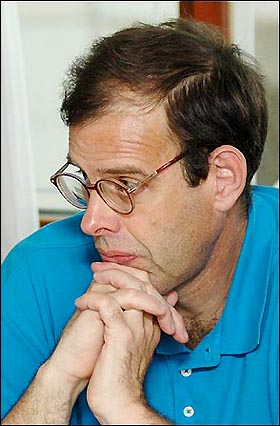
Roger Alford at Opinio Juris was reminded by St. John's John Barrett (a classmate of mine from HLS '86, who is a leading scholar of Robert Jackson and the Nuremberg trial), here, that today is the 60th anniversary of Robert Jackson's (pictured right) opening statement at Nuremberg. It remains one of the great statements of natural law in international law - although modern students are wont to view it as a statement primarily about war crimes and conduct of war, whereas Jackson himself saw the essential issue at Nuremberg to be the criminalization of aggressive war itself - leaving the conduct questions essentially to the two parties among the prosecutors who had suffered the most, the Soviet Union and France.

The irony, of course, is that (leaving aside the non-starter of the International Criminal Court having the authority, somehow, someday, under the Rome Statute, to define aggressive war), Jackson's effort to judicialize the question of aggressive war did not really survive the founding of the United Nations itself, which essentially committed all those jus ad bellum questions to the Security Council, not judges, political questions, not judicial ones. What has survived from Nuremberg, in some form, is the judicialization of jus in bello - precisely the part that Jackson did not think really worth his time, because, as he correctly understood, war crimes had always been criminal, and so except with regards to particulars - even huge ' particulars', such as genocide and crimes against humanity - the prosecution of those crimes did not advance his bold agenda. A truly bold agenda - making the Kellogg-Briand pact, among other things, the basis for holding individuals liable for aggressive war. But not an agenda that survived very long.

I realize that this does not sound all that flattering to Jackson. But there is a huge amount of hype surrounding Jackson and what he supposedly achieved at Nuremberg. I think he overreached, and the past sixty years have shown exactly that. I had a chance to reflect a little on this, ten years ago, when reviewing Telford Taylor's massive and magisterial memoir, The Anatomy of the Nuremberg Trials.

I was privileged to meet Taylor several times a couple of years before he passed away - he invited me in each case to lunch at the Harvard Club in New York City - as he was passing over to me the extraordinary honor of teaching his course on the laws of war at Columbia Law School (his outstanding co-teacher, Jonathan Bush, was leaving for the West Coast). He was in his middle or late 80s at the time, courtly and unfailingly polite to a very young colleague, and simultaneously full of enthusiasm and vigor. He had just published his memoir, and was eager to get on with his next (as I recall, he had just been informed that case files from Nuremberg that had been lost in Army warehouses since the late 1940s - like the final scene in Raiders of the Lost Ark, I guess - had been found, and he wanted to go through them and publish a second volume). I was duly humbled - as I would have been, I hasten to add, had I met Justice Jackson - I criticize his overreaching as an intellectual matter and political matter, with no disrespect intended.

(I will post a link to the review of Taylor's book - somehow it is not up on my faculty website, which is here.)

But in that review essay I quoted a senior British judge advocate, whom I had come to know in my landmines ban work for Human Rights Watch in those years - and who preferred to remain anonymous. It is something that bears remembering, and indeed is worth more than the rest of the review altogether. "Nuremberg," he said, was

"a lovely hood ornament on the ugainly vehicle that liberated Western Europe, but it was not a substitute for D-Day."

And I added to that: A military victory [was] not a merely a practical prerequisite to a trial, but a moral necessity.

James MacDonald, A Free Nation Deep In Debt

There is a book I have been meaning to write a bit about for a long time now. It is James MacDonald, A Free Nation Deep in Debt: The Financial Roots of Democracy (FSG 2003).

I picked up this book when it was published in 2003, but then left it behind when I went on sabbatical to Spain shortly after, as it runs 500 pages in hardback. So I didn't read it until earlier this year, in 2005, and I was very glad I did. Here is the publisher's weekly summary:

Public borrowing from citizens in times of war has gone hand in hand with modern democracy, Macdonald argues in this dense, sweeping economic history. A former investment banker now living in London, Macdonald traces the history of public financing of "national emergencies" (read: wars), from the biblical era through the present day. Until modern times, he shows, nations relied on stored treasure and surpluses to finance wars, often with detrimental results. Indeed, Macdonald argues that an inability to raise taxes for wars was one of the causes of Rome's downfall. Placing the importance of credit back at the center of historical causality is one of the book's strengths. The system of public credit swept onto the world stage in 18th-century Britain, France and the United States, and was intricately linked, notes the author, with revolutions in these latter two countries. During the 20th century, the system-and the notion of a "citizen-creditor"-reached its strongest point during WWI and likely had its swan song during WWII, because of postwar inflation, the succeeding decline in trust in government in the West and the increasingly global understanding of citizenship. There is much to learn here, but despite Macdonald's best attempts at accessibility, readers without a background in economics will struggle through.

That's a pretty accurate summary, although the most powerful part of the book, I think, is the discussion of the rise of public finance and the links to democracy and absolutism beginning with the Italian city-states, and going on to early modern France and Britain and Holland. (In some important ways, it recalls Niall Ferguson, before he decided to become a pundit, in Ferguson's history of First World War finance, The Pity of War.)

The essential thesis is that states which were able to persuade their own citizens to purchase the sovereign's bonds tended to be more democratic, because they had to be responsive to citizens in order to persuade them to become their own state's creditors. Contrawise, absolutist states, such as France of the Sun King, had could not persuade their own citizens to finance the king's wars voluntarily and, because no state's treasury was large enough to absorb more than the first campaign in war, had to look to foreign bankers to finance the debt - but because they correctly feared the repudiation of debts, charged interest rates accordingly.

MacDonald, whose historical reading is wide and deep, quotes - of all things - the memoirs of the Duc de Saint Simon on the French King, not merely the famous passage, "he loved war too much," but a much more subtle passage about the relationship of absolutism to debt:

"An establishment of this sort [John Law's famous state bank proposal] may be good in itself; but it is only so in a republic or a monarchy like England, whose financed are controlled by those alone who furnish them, and who only furnish as much as they please. But in a State which is weak, changeable, and absolute, like France, stability must necessarily be wanting ..." (at 193, emphasis added)

As MacDonald observes, it is the "juxtaposition of the adjectives 'weak' and 'absolute' that catches the eye ... Saint-Simon recognised, for perhaps the first time in European history, the inherent weakness of an absolute monarchy and the greater inherent strength of a republic of merchants." (at 193) At another point in the book, someone argues that in a military struggle defined by access to capital, the English will inevitably do better than the French, because they can gain loans from their own people at 3-5% interest, while the French king must pay two or three times that.

The entire book is filled with this richness of historical detail coupled with the detailed knowledge of finance that a former investment banker is able to bear. The very title comes from an 18th century anonymous English pamphlet praising (however strange to our contemporary ears) sovereign debt as being the way in which government is held in check and liberties maintained.

Yet MacDonald is very careful to point out the profound limits of the argument. He notes that by the twentieth century, the fact that debt was not widely held among the whole population - the republic was not, so to speak, a republic of merchants any longer, even though merchants held the debt - meant that different classes and groups in society had different interests. The merchants sought a state that would repay their loans with interest, while others in society who did not hold sovereign debt - not merely the poor, but also, in the case of England, the cash poor landed gentry - had in mind quite different tasks for the state and fisc. MacDonald's thesis extends to an important historical factor in the establishing of the Western democratic state, but he does not suggest that the role of sovereign debt has not changed enormously over the centuries.

I really do think this is one of the best books on the history of finance set in a broader political setting that I have ever read, and I would have thought it should have been considered one of the best books in history for 2003.

Michael Glennon on UN reform, High level panel report, and just war theory

I believe I have flagged this Policy Review article by Michael Glennon, Tufts University, before. Idealism at the UN, Policy Review, February-March 2005.

There are several reasons why this article is important. One is that it addresses squarely the question of differing ideals, as well as differing national interests, in how states and, particularly, members of the Security Council, view what warrants the use of military force. States really do differ in their idealisms about the use of force. The failure of the High Level Panel report, and by extension efforts at UN reform, to recognize those differences and instead elide them under a spurious idea that there is a shared vision and legitimacy, is one of the many things that, as Glennon says, self-marginalizes current efforts at UN reform.

Glennon locates this discussion of legitimacy and the use of force in a skeptical examination of the just war paradigm which, as he notes, plainly informed the criteria which the High Level Panel put forth for the use of force. Glennon's skepticism focuses on the Western Christian nature of that doctrine - it is not universally accepted by any means, even in its secular version - but especially in the assumption that there is a sufficient consensus on what constitutes just cause in war. He notes acerbically that Augustine himself, in the City of God, did not think the question of what constituted the just cause more than the failure of "impious" men to see the truth - and notes that the section on just war in Augustine is followed by an approving chapter on the "persecution of heretics." Idealism is easy if we all have the same ideals and they all reduce to the same course of action. But of course we don't see things all the same way in matters of justice, Augustine aside (Glennon might have referenced Lincoln's agonized irony on this matter in the Second Inaugural Address).

Well, reform at the UN is going nowhere, at least at the level of issues that this article, and the High Level Panel, address - Security Council reform and the use of force. Those issues are clearly off the table, as well they should be, since, in the absence of any of the unity of ideals that reform would presuppose, there is nothing much to discuss or do. But UN reform also appears to be stalled at well below those levels of lofty ideals and abstraction, to judge by the current General Assembly session, which is tasked in the Final Outcome document from September with many important matters. Isn't it time to treat the central bodies of the UN - the General Assembly, the Security Council, etc., as simply talking shops? Give up on any kind of reform other than the question of auditing to defend against outright embezzlement, abolish institutions that are inherently about questions of values and therefore, in a UN system, inherently capturable by the bad guys, such as the UN Human Rights Commission, and keep the UN out of areas in which it can only do great mischief, such as regulation of the Internet?

Glennon's article is worth reading for its just war theory discussion as well as for its UN reform discussion.

James Surowiecki on Euro v American working hours


James Surowiecki has this piece in the New Yorker of November 28, 2005, discussing comparative working hours of (Western) Europeans and Americans. He argues, as several economists have suggested, that tax rate differentials alone are unlikely to account for the large disparity between the more hours Americans work and the fewer hours Europeans work. He says, following new economic studies, that the most important reason is not tax rates, but the collective bargaining structure of labor in Europe. But as he says, just as in America, collective decisions to work more hours means more service jobs for those who do the work (mowing the lawn, etc.) that people can't do because of their day job, in Europe, a collective decision for voluntary leisure for some means involuntary leisure for others - including those recently rioting in France.

I would add, as a guess, that one reason that America is richer than Europe is not simply, as the article says, Americans work more hours. The extra hours they work - including those additional service jobs such as mowing the lawn - are more efficiently spent, the efficiencies of the division of labor. It's not just more hours worked, it's also hours devoted to the highest value added activity for each worker.

I have some skepticism that collective bargaining is so much more important over tax rates - more precisely, I suspect, on no evidence whatever, that tax rates are better seen as an aspect of collective bargaining in such highly regulated economies - but I accept the main point that labor market reform in Europe, if it ever were to be, would have to undertake not merely tax reform and a lot of other things, but, well, labor market reform.

It's a very nice short article. Excerpts:

***
The New Yorker
Talk of the Town
THE FINANCIAL PAGE

NO WORK AND NO PLAY
by James Surowiecki

Issue of 2005-11-28
Posted 2005-11-21

In the nineteen-fifties and sixties, it was a commonplace that Americans would soon devote their lives to leisure, not work. The number of hours the average American worked had fallen by almost twenty-five per cent between 1900 and 1950, and pundits saw no reason for the trend to stop. By the end of the twentieth century, the futurist Herman Kahn prophesied in 1967, Americans would enjoy thirteen weeks of vacation and a four-day work week. The challenge, it seemed, would be figuring out what to do with all our free time.

Kahn was wrong. Today, Americans work about as many hours each year as they did in 1970, and, instead of thirteen weeks of vacation, the average American now gets four (and that includes holidays). But there is a place that has got considerably closer to the leisure society of the futurists’ dreams—Western Europe. The French work twenty-eight per cent fewer hours per person than Americans, and the Germans put in twenty-five per cent fewer hours. Compared with Europeans, a higher percentage of American adults work, they work more hours per week, and they work more weeks per year.

One obvious result of this is that America is richer than Europe. In terms of productivity—that is, how much a worker produces in an hour—there’s little difference between the U.S., France, and Germany. But since more people work in America, and since they work so many more hours, Americans create more wealth. In effect, Americans trade their productivity for more money, while Europeans trade it for more leisure. Folk wisdom suggests that the reason for this difference is cultural, which, depending on your perspective, means either that Europeans are ambitionless café-dwellers or that Americans are Puritan grinds with no taste for the finer things in life. But, while culture undoubtedly matters, not that long ago it was the Europeans who worked harder; in 1970, for instance, the French worked ten per cent more hours than Americans.

So what changed? The Nobel Prize-winning economist Edward C. Prescott has pointed to sharp increases in Europe’s tax rates since 1970—higher taxes give workers less of an incentive to work extra hours. But taxes aren’t high enough to explain Europeans’ new taste for free time. A more plausible explanation was put forward recently by the economists Alberto Alesina, Edward Glaeser, and Bruce Sacerdote: European labor unions are far more powerful and European labor markets are far more tightly regulated than their American counterparts. In the seventies, Europe, like the U.S., was hit by high oil prices, high inflation, and slowing productivity. In response, labor unions fought for a reduced work week with no reduction in wages, and greater job protection. When it was hard to get wage increases, the unions pushed for more vacation time instead. Governments responded to political pressure by plumping for leisure, too; in France in the eighties, for instance, a succession of laws increased mandatory vacation time and limited employers’ ability to use overtime.

The difference in work habits between Europeans and Americans, in other words, isn’t a matter of European workers’ individually deciding they’d rather spend a few extra hours every week at the movies; it’s a case of collectively determined contracts and regulations. There is a good deal to be said for this approach—most Americans, after all, are happy that the forty-hour week is written into law—but it has its costs. Even if you want to work more, it’s hard to do so: try getting anything done in Paris during August. And reducing the amount of work employees do makes it more expensive to employ people, which contributes to Europe’s high unemployment rate.

The embrace of leisure affects the job situation in Europe in other ways, too. Because Americans spend more hours at the office than Europeans, they spend fewer hours on tasks in the home: things like cooking, cleaning, and child care. This is especially true of American women, who, according to a study by the economists Richard Freeman and Ronald Schettkat, spend ten fewer hours a week on household jobs than European women do. Instead of doing these jobs themselves, Americans pay other people to do them. For instance, Americans spend about the same percentage of their income stocking up on food at home as the French and the Germans do, but they spend roughly twice as much in restaurants as the French, and almost three times as much as the Germans. Not surprisingly, many more Americans than Europeans work in the restaurant business. The same is true of child care.

In the American model, then, you work more hours and use the money you make to pay for the things you can’t do because you’re working, and this creates a demand for service jobs that wouldn’t otherwise exist. In Europe, those jobs don’t exist in anything like the same numbers; employment in services in Europe is fifteen per cent below what it is in the U.S. Service jobs are precisely the jobs that young people and women (two categories of Europeans who are severely underemployed) find it easiest to get, the jobs that immigrants here thrive on but that are often not available to immigrants in France. There are many explanations for the estimated forty-per-cent unemployment rate in the banlieues that have been the site of recent riots, but part of the problem is that voluntary leisure for some Europeans has helped lead to involuntary leisure for others. The less work that gets done, the less work there is to do. Helping some people get off the labor treadmill can keep many people from ever getting on the treadmill at all.

Thursday, November 17, 2005

Why the UN shouldn't run the internet, end of story, punto, fin

See this post from the Beckman center at Harvard Law School, blogged from the WSIS meetings in Tunisia, here. Good lord. Also, see this op-ed piece by Claudia Rosett in today's Wall Street Journal (November 16, 2005, opinion page). And this from Open Source Media, via Instapundit.

(Update, Monday, November 21, 2005, see also this editorial from today's Washington Post.)

Wednesday, November 16, 2005

Harvard Law Review on foreign law in US courts

The new issue of the Harvard Law Review, Vol 119, No. 1, November 2005, here, has a very good set of articles debating the use of foreign law in US constitutional adjudication. Judge Posner has a discussion of it in his forward under the "cosmopolitan court," and then the Roper v. Simmons question is taken up by Vicki Jackson, Jeremy Waldron, and Ernest Young. They are all good articles, and it is nice to see that the Harvard Law Review is now posting them with full text pdf files.

Tuesday, November 15, 2005

What I'm reading - an irregular series

When not reading the 5,000 pages of the ICRC study Customary International Humanitarian Law ...

Well, I bought, and launched into, Tony Judt's new history of Europe after WWII, Postwar: A History of Europe Since 1945. I'm only a chapter into it, but so far it is terrific.

However, because Postwar is gigantic and weighty, I decided not to take it with me on my trip to Prague last week. Instead I picked up the somewhat less weighty new book on the Pelopponesian War by Victor Davis Hanson, A War Like No Other.

Until starting to read Hanson, I had not paid that close attention to classical warfare. Of course I read about it in longer studies of strategy and all that - Archer Jones, The Art of War in the Western World, for example - but I had not thought very hard about the Greeks and Greek warfare as such.

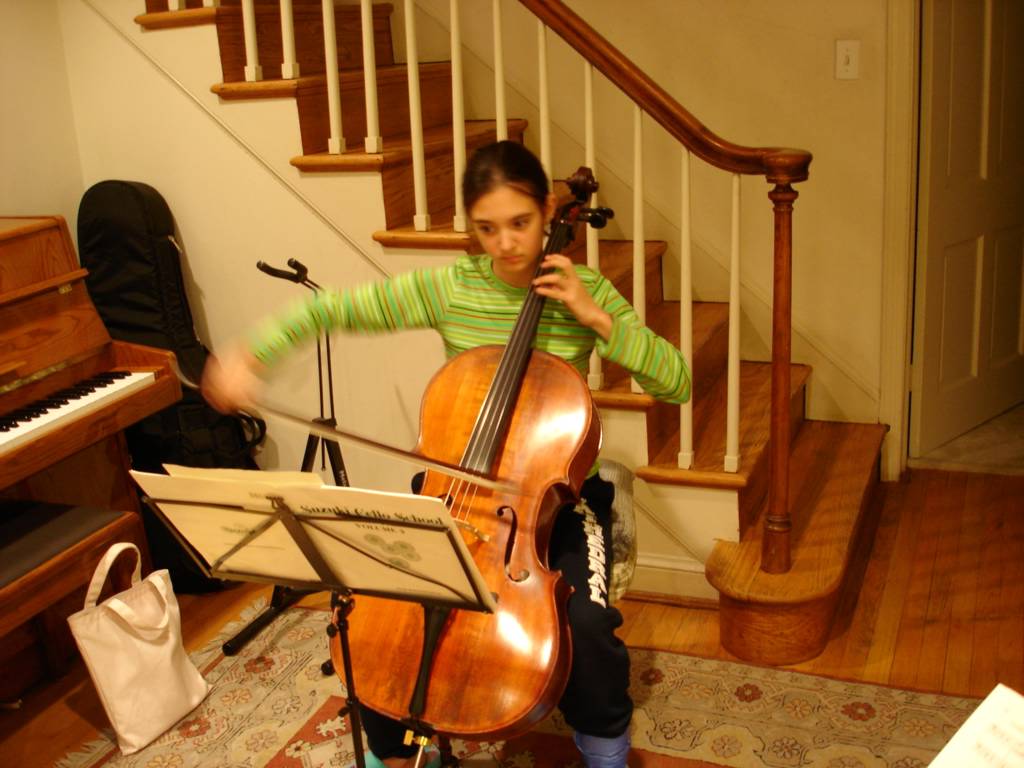
Three things piqued my interest. One was editing a special issue of the Iowa Journal of Transnational Law some years ago, in which I invited the classicist Julie Laskaris to write an essay on homoeroticism in war, drawing upon classical Greek sources; she wrote an outstanding essay, unfortunately apparently not online anywhere. Second was reading Hanson's earlier work on the relationship between democracy, citizenship, and war, Carnage and Culture. Third was when my 6th grade daughter (here, shooting a rifle out in Bishop, California, and rockclimbing in the Sierra Nevada, here, and playing her cello, here - sorry, proud daddy) studied the Pelopponesian War and was assigned a paper on Greek hoplite combat - I gave her Hanson's Smithsonian study, Wars of the Ancient Greeks, for help. I realized I didn't know that much about either the Pelopponesian War or Greek warfare.

A War Like No Other proceeds to tell the story of the war not by chronology which, obviously, has been done so often since Thucydides, but instead by theme. Terror, armor, walls, and so on, provide a way of understanding the themes of war and battle that transcend Greek warfare, even while shedding considerable concrete light on how the Greeks actually fought - and how the Pelopponesian War changed how they fought. I have a little hesitation about Hanson's attempt to make it relevant today by using catchphrases and terms that don't seem to me politically to translate very well from one day to another, but on the other hand, by pushing that envelope a bit, he makes you think hard about what continues in warfare across Western history.

One very interesting point that Hanson makes repeatedly, in this book and elsewhere. Athenian democracy, he notes, was really not so different from a mob merely. It was rule by an assembly of thousands of shouting, jostling men, easily roused to passion and lacking reason, whether to execute even a victorious admiral on insignificant charges or to invade and sack some faraway place, such as Melos. Hanson forces one to think a great deal more than we usually do about the virtues of countermajoritarianism, forcing time for reflection before enacting policy, and figuring out what separates the democratic assembly from the mere mob roused by a demagogue. It's a sobering lesson, particularly for people like me who routinely press for greater democratization and participation.

Nicholas Eberstadt on aging in the developing world


Nicholas Eberstadt, the demographer par excellence at the American Enterprise Institute, has this piece in today's Wall Street Journal on the consequences of a demography of aging among populations of much of the developing world, and particularly India and China. Here is the article, from the WSJ, Tuesday, November 15, 2005, reposted at AEI's website.

***

Old Age Tsunami

By Nicholas Eberstadt

Posted: Tuesday, November 15, 2005

ARTICLES
Wall Street Journal
Publication Date: November 15, 2005

Over the past decade, an ocean of ink has been spilled over the problem of population aging in the world's richest societies (Western Europe, Japan and North America). Low-income regions have attracted relatively little attention: Yet over the coming decades a parallel, dramatic "graying" of much of the Third World also lies in store, and it promises to be a far uglier affair than the "aging crisis" facing affluent societies. The burdens of aging simply cannot be borne as easily by the poor; low-income societies and governments have far fewer options, and the options available are considerably less attractive.

For some poor countries, the social and economic consequences could be harsh indeed: Graying could emerge as a factor directly constraining long-term growth and development. In fact, rapid and pronounced population aging may represent one of the most least appreciated long-term risks facing many of today's developing economies.Population aging is driven mainly by low birth rates rather than by long life spans--and since fertility levels in poor regions continue to drop, the momentum for Third World population aging continues to build. Not, to be sure, in sub-Saharan Africa, where the median age is likely to remain a mere 20 years some two decades from now. And certainly not in those parts of the Arab/Islamic expanse where total fertility-rate levels still apparently exceed five births per woman per lifetime (viz., Yemen, Oman, Afghanistan). But in much of East Asia, South Asia, Eastern Europe and Latin America, sub-replacement fertility is already the norm.

China: Of all the impending Third World aging tsunamis, the most massive is set to strike China. Between 2005 and 2025, about two- thirds of China's total population growth will occur in the 65-plus ages--a cohort likely to double in size to roughly 200 million people. By then, China's median age may be higher than America's. Notwithstanding the recent decades of rapid growth, China is still a poor society, with per-capita income not much more than a tenth of the present U.S. level.How will China support its burgeoning elderly population? Not through the country's existing state pension system: That patchwork, covering less than a fifth of the total Chinese workforce, already has unfunded liabilities exceeding China's current GDP.

Since the government pension system is clearly unsustainable, China's social security system in the future will mainly be the family unit. But the government's continuing antinatal population drive makes the family an ever-frailer construct for old-age support. Where in the early 1990s the average 60-year-old Chinese woman had five children, her counterpart in 2025 will have had fewer than two. No less important, China's retirees face a growing "son deficit." In Chinese tradition it is sons, rather than daughters, upon whom the first duty to care for aged parents falls. By 2025, a third or more of Chinese women approaching retirement age will likely have no living sons.

Paradoxically, despite all China's material progress, the nation's elderly will face a continuing, and quite possibly a growing, need to support themselves through their own labor. But as China's elderly workers tend to be disproportionately unschooled, farm-bound and less well-trained than the general labor force, they are, perversely, the ones who must rely most upon their muscles to earn a living.On the current trajectory, the graying of China thus threatens many tens of millions of future senior citizens with a penurious and uncertain livelihood in an increasingly successful emerging economy. The looming fault lines for "impoverished aging" promise to magnify yet further the social inequalities with which China is already struggling.

Russia: The demographic outlook for this country may seem to read like a tale that is ordinarily European: While total population falls, median age rises well above the 40-year mark by 2025, with close to 20% of the population 65 or older. But Russia is far poorer than Western Europe today.Russia's particular vulnerabilities pivot less on the size of nation's elderly population than on the exceptional frailties of the workforce that must support it. Russia has suffered an extraordinary long-term deterioration of public health: Life expectancy is lower today than 40 years ago, and Russia's mortality upswing is concentrated in the "working ages." For Russians between 30 and 60, for example, death rates have shot up by over 45% since 1970. Demographers have low expectations for future progress in health--the U.S. Census Bureau, for instance, projects that Russia's male life expectancy will remain lower than India's through 2025, and beyond.

Per-capita income in Russia is now barely one fourth of the European Union. Looking forward, it is difficult to see how Russia can hope to achieve an Irish standard of living if its labor force still faces an Indian (or worse) schedule of survival. Population aging in the context of poor or even declining health poses special challenges. The aging of Russia's workforce (median age for the 15-64 group will rise about three-and-a-half years between now and 2025) means that the health situation for Russian manpower could be less favorable in the future.

The specter of a swelling population of pensioners dependent for support on an unhealthy and diminishing population of low-income workers conjures up grim political choices. Should Russian resources be channeled to capital accumulation, or to consumption for the unproductive elderly? Given Russia's population structure, that question will be impossible to finesse.

India: The overall population profile will remain relatively youthful, with a median age projected at just over 30 in 2025. But this is an arithmetic expression averaging diverse components of a vast nation. Closer examination reveals two demographically distinct Indias: a North that stays remarkably young over the next 20 years, and a South already graying rapidly due to low fertility.It may surprise some readers to learn that sub-replacement fertility already prevails in most of India's huge urban centers--New Delhi, Mumbai (Bombay), Kolkata (Calcutta), Chennai (Madras) among them. Even more surprising, sub-replacement fertility prevails today throughout much of rural India, especially in the rural South. There, graying now proceeds apace. By 2025, South India's population structure will be aging unmistakably. In places like Kerala, Tamil Nadu and Karnataka, median age will be approaching a level comparable to Europe's in the late 1980s--and around 9% of population will be 65 or older (Japan's level in 1980).

A generation before Western Europe's median age reached 35 or Japan's 65-plus set accounted for 9% of national population, however, their average per-capita GDPs were $6,000-$8,000. By contrast, the exchange-rate-based GDP per capita in Kerala and Tamil Nadu today stands at under $500 per year. Even if India, like the Japan of an earlier day, could grow its GDP per capita at an annual rate of 5.5% over the coming generation, significant parts of India would be reaching the threshold of the "aged society" on income levels almost an order of magnitude lower than Japan and Western Europe in the mid-1980s.

Since 1991, India has averaged a highly respectable 4% GDP per- capita growth rate and has become a presence in the global IT economy through enclaves in places such as Bangalore. But Bangalore--like the rest of the Indian South--is part of what may soon be known as Old India: While its labor force is relatively skilled, it is also older, and absolute supplies of available manpower will peak and begin to shrink. Other parts of India, by contrast, will have abundant and growing supplies of labor, but a disproportionate share of that manpower will be entirely unschooled or barely literate. Educated and aging, or untutored and fertile: This looks to be the contradiction--and the constraint--for India's development in the decades immediately ahead.

The coming conjunction of an aging population in the world's developed economies and in important parts of the developing world naturally raises the question of potential global impact. Global capital markets may be efficient in allocating investment to promising countries, corporations and projects, but the availability of capital affects its cost, and thus the profitability or attractiveness of undertakings world-wide. By the same token, economic slowdowns in one major region would be expected to have spillover impacts on growth in other regions in an environment of liberalized global trade.

Will the aging of the Third World have unanticipated spillover effects for the world economy? The answer is not yet clear--but it is none too early to begin asking the question.

(Nicholas Eberstadt is the Henry Wendt scholar in Political Economy at AEI. This essay draws on his chapter in the World Economic Forum's forthcoming Global Competitiveness Report for 2005-2006.)

Monday, November 14, 2005

My initial reactions to the ICRC Customary International Humanitarian Law Study

(Important update, 24 January 2006. Jean-Marie Henckaerts, who along with Louise Doswald-Beck are the authors of the Customary Law Study, has been kind enough to send along a response to my comments on the study. It was extraordinarily nice of him to take time to respond to what is, after all, a blog post - my thanks for taking it with such care and seriousness. I have put his response in two places on this blog. It appears at the end of this post, following my comments. I have also put it as a separate post under January 24, 2006, here.)

***

This past spring, the ICRC issued a major new study in the laws of war, a massive three volume treatise and reference work titled Customary International Humanitarian Law (Cambridge UP 2005; various materials related to it can be found at the ICRC website, here.) I have been slowly - very slowly - working my way through its 5,000 some pages and am delighted to say I have finally finished it. Of course one doesn't really read such a study - it is a reference work, used like a dictionary - but this kind of work requires a total reading if you are looking to understand its underlying structure and suppositions. I plan to write a review essay on it for Policy Review, and perhaps for some law review as well (my Spies report that Anthony Dworkin is reviewing it for the Times Literary Supplement, and I look forward to reading his review). Because the Study is so new, very little review material or academic reactions have yet been published, although the ICRC has some important conference materials on its website from the initial launch, and the ICRC book tour around various law faculties (including an important one in September at my law school) will eventually produce some important scholarly commentary. At this point, the one law review article I am aware of is found in the German Law Review, by Malcolm MacLaren and Felix Schwendimann, which I discussed in an earlier blog post.

What follows are edited remarks taken from the briefing memo I drafted giving initial reactions to the ICRC Study in preparation for a small discussion meeting on Wednesday that Tod Lindberg and I are sponsoring on behalf of the Hoover Institution. The meeting is very small, just a couple of people for lunch, but I believe it will be useful in thinking through my review essays. I will also find an occasion to talk with the ICRC, and I hope with the Study's authors, Jean-Marie Henckaerts and Louise Doswald-Beck, who have certainly devoted years of their lives to this work. But here are my initial reactions:

***
Background
The Study arises from a mandate given to the ICRC in 1995 by the 26th Annual Conference of the Red Cross and Red Crescent, and has been some eight years now in preparation. It was written by two highly respected specialists and members of its legal division – Jean-Marie Henkaerts and Louise Doswald-Beck, both of whom had served at the ICRC, although the ICRC considers the work primarily scholarship and so “respected the academic freedom of both the report’s authors and of the experts consulted.” (Kellenberger introduction, at xi.) (See the acknowledgments in order to get an idea of the various national and international experts - all leading names in the field - who assisted in the Study’s preparation.)

The overall intent of the Study is to “capture the clearest possible ‘photograph’ of customary international humanitarian law as it stands today.” (Kellenberger introduction, at xi.) In seeking to make that both clear and comprehensive, however, the result is extremely voluminous, running three volumes and five thousand or so pages. It is daunting, by any measure, and yet outstandingly organized and edited to make its pronouncements and supporting documentation remarkably clear. The writing is plain, clear, and, within the inherent limits of the subject matter, rigorous. By any measure, the Study counts as a prodigious accomplishment in scholarship, ranking alongside and, in many respects, even surpassing as a scholarly achievement the ICRC’s Commentaries to the Geneva Conventions and the Commentary to the 1977 Protocols in scholarly and academic terms. This is high praise indeed.

What does the Study mean in practical terms for matters of international humanitarian law? The view of the ICRC is that the Study “does indeed present an accurate assessment of the current state of customary international humanitarian law.” The ICRC therefore intends to “take the outcome of this study into account in its daily work.” (Kellenberger introduction, at xi.) The Study’s view of customary law will thus form the basis, for example, of ICRC challenges to the US practices regarding detainees. Beyond the ICRC, it will almost certainly be absorbed as authoritative by other non-governmental actors, international tribunals, and others. It will thus be cited as essentially binding authority in a wide variety of venues, ranging from courts to treaty negotiations. Because of the fact that customary law is, in principle, binding on all states even without formal consent, the implications of the Study being accepted as authoritative are, to say the least, weighty for international law. Finally, it should be noted, the Study may well have a very significant practical effect within US domestic legal practice, as it will surely be widely cited and, absent some clear dissent from the US, be accepted as the authoritative standard for the content of customary international law in Alien Tort Statute and other domestic cases that turn on international law.

Methodology
The methodology of the study, at the most practical level, is to state a rule considered by the Study to be a binding rule of customary international humanitarian law, and then discuss it, its boundaries, interpretation, and internal and external features by reference to existing treaty law and what the Study refers to as state practice. It offers, in Volume I, 161 such rules, organized in a coherent order beginning with the most basic principle of distinction, working through specially protected persons of various kinds, methods of warfare, weapons, treatment of civilians and other persons hors de combat, and finally implementation.

State practice. The nature of “state practice” is discussed in detail in the Study’s introduction, at xxxi-xlii. It is evident, both from that introduction, as well as from examination of the rules themselves, that state practice in the sense of the Study has a particular emphasis on the verbal acts of states – state pronouncements, internal military manuals, announced procedures, etc.

Therein, however, lies a chief methodological question for consideration: does the Study privilege the written and verbal aspects of state practice over what states, and in particular militarily significant states, actually do in actual wars? My own view is that notwithstanding the stated emphasis on state practice in totality, the actual tendency of the Study is to rely primarily on written expressions by states, and often to rely on written views of states that may or may not have much practice of contemporary warfare. Thus, for example, the views of Germany through its military manual – a model of writing and clarity, it must be acknowledged – are a very important source of state practice for the Study. Yet the fact remains that however well developed in theory the views of the German government, its actual participation – its physical state practice – in war since 1945 is approximately zero.

Likewise, the exhaustive cataloging of the views of many smaller countries on these issues, while admirably inclusive from the standpoint of acknowledging the “international community,” might be thought to muddy the waters of what actual state practice is in the world of war today. How useful is it, really, to consult the supposed state practice, in matters of war, of Trinidad and Tobago? The completeness produces a prodigy of scholarship – but one might be concerned that the effort might better be regarded as an edifice of scholasticism, massively researched and yet not actually reflecting the world of war as it is.

The flip side of this exhaustive inclusivity is that the views of larger and military powerful states are inevitably downplayed. Unsurprisingly, the views of the United States are the most downplayed – not from any ideological motivation, but simply as a result of a method that emphasizes including everyone’s views, and regards “views” as equally important if not, in the aggregate, more important than the facts of how parties fight. There is, in other words, a certain sense in the Study that in the battle over legal rules, he who writes the most memos wins. (This concern is highlighted by the Malcolm MacLaren and Felix Schwendimann article included in the materials which, given the newness of the study, is one of the few published academic discussions of the Study.)

Protocol I. At the substantive level, there is an elephant lurking in the living room, so to speak. This is simply that at critical junctures, the Study proceeds as though Protocol I really had been accepted by the whole world, and that customary law can be largely predicated on the language of Protocol I and, in important respects, go beyond it. This is a very, very serious problem for the Study, and certainly for the US view of it. One can see, however, how such a view might arise, from the sheer inclusivity of approach to state practice – after all, Protocol I has been accepted by 163 countries. With such wide participation, how can it not essentially be customary law? The problem, as George Aldrich points out in his comments to the Study, is that twenty nine countries have not ratified Protocol I. Lest one think they are of minor import, they include India, Indonesia, Pakistan, Iraq, Iran, Israel, Turkey, and the United States. (And, it should be added, the reservations made even by ratifying countries are dauntingly large.)

The states that have not ratified Protocol I, in other words, include some those most involved in, or likely to be involved in, significant warmaking. As Aldrich says, substantive dissent “from certain provisions of the Protocol by at least some of those States makes it impossible to suggest that the Protocol should, like the 1949 Conventions, be considered to be, at present, a codification of customary law.” Indeed, as he points out – and I fully concur – had Protocol I obtained

“near universal acceptance ... there would be little interest in the question of what constitutes customary international humanitarian law in international armed conflicts. And I suspect that the massive research project that resulted in this book would either not have been undertaken or would have concentrated on internal armed conflicts. It is the failure of Protocol I to achieve complete acceptance of States that makes the substance of customary law both important and sensitive.”

The implication of this is plain and profound with respect to US views of the Study. Quite bluntly, the Study amounts to an attempt to create customary law status for many of the provisions of Protocol I – including, however, both provisions which surely merit such status but also provisions that, if Protocol I has not achieved customary status, do not merit that status on their own. In very important, very disturbing ways, the Study represents a sort of customary law “end run” around the failure of Protocol I to achieve near universal or customary status itself. And indeed, as an examination of various of the Study’s rules indicates, the Study proposes to carry certain very significant rules beyond even where Protocol I’s negotiated outcomes rested them.

Finally, if one is speaking as bluntly as I have just done, it bears noting that although the research teams indubitably are a selection of the world’s finest scholars in the laws of war (see xlvi), it cannot be said, so far as I am aware, that many, if indeed any of them, bring to the table any significant skepticism about the desirability of an expanding reach for customary rules, or even, so far as I am aware of their writings individually, any reservations about the desirability of seeing Protocol I become universally applicable. This is by no means to suggest that they have not brought their full scholarly knowledge and objectivity to bear; I am sure they have – the problem is that this field of law is inherently not measurable entirely objectively. Thus it remains that, within the expert pool, there are apparently no skeptical voices with regard to a methodological preference for carrying the “customification,” if you like, of the laws of war, forward, and this seems to me a difficulty.

Examples from the Study's Rules
Here are a couple of examples of the rules, in order to see how they are developed and what state practice is purported to mean.

Rule 54, covering objects "indispensable to the survival of the civilian population." As Aldrich points out, the formulation of the rule in the Study admits no exceptions - and it is therefore vastly more restrictive than the equivalent rule in Protocol I, article 54, from which it is derived, which qualifies the rule with several important layers of exceptions.

Rule 106, requiring that combatants distinguish themselves from civilian population. Again, as Aldrich points out, the Study rule is significantly simpler than the equivalent Protocol I rule or the Article 4, Geneva III rule. Aldrich points out that the Protocol I rule, unlike the Study rule 106, limits the reach of POW status, without which “any terrorist band could argue that they were combatants provided that they distinguish themselves from civilians in the limited circumstances stated in Rule 106.” It hardly bears stating that the United States, which has significant problems with the formulation in Protocol I, would hardly agree with the still more generous formulation of Rule 106.

Rule 81-82, Landmines. These two rules acknowledge that despite the 140 ratifications of the Ottawa Convention banning antipersonnel landmines outright, the failure of several states to ratify in addition to usage by a dozen or so non-party states “means that it cannot be said at this stage that the use of anti-personnel landmines is prohibited under international law.” (At 282). It is encouraging that despite the ardent desire of much of the international community to have antipersonnel landmines banned under customary law, the Study resists the conclusion. (I should add my own ardent desire to see antipersonnel landmines banned – by treaty.) However, it is also striking – and this is fairly consistent throughout the Study – that the reason offered is not that the dissenting states are large, militarily important, or characterized in such a way as to distinguish, for example, the importance of US non-participation from that of another, but far smaller non-participant, Finland. It is, rather, simply that “several States” have not ratified – perhaps suggesting that in a list that includes the United States, China, India, Pakistan, South Korea, and Russia, as well as Finland, the military importance of those countries speaks for themselves.

The US Response and Opinio Juris
The final question, then, is how the United States should respond to the Study. Should it respond formally? One of the key aspects of the Study, something that goes beyond the particular subject matter of the Study itself, is the implication of the Study’s assumptions that “verbal” state practice is as if not more important than physical practice. The principal focus of the Study is not how warfare has actually been conducted, but, to the extent that the practices of states engaged in warfare matter, what they have said about it. This puts pressure on the United States to do more than simply presume that the fact that it consistently behaves in a certain way is sufficient to establish that as the state practice of a leading military state; it puts the United States under pressure to declare itself as a matter of opinio juris.

Yet the United States seemingly has had great difficulty getting out a consistent, formal, clearly enunciated statement of opinio juris on matters of the laws of war since the end of the Viet Nam war at least. The United States has only fitfully responded to the challenge of Protocol I – refusing to ratify, but never spelling out in a formal way its objections. More importantly, it has not issued its own revised Army laws of war manual that would be the natural place in which the United States would make plain what it agreed with in Protocol I and what it did not. Whatever the virtues of the US approach in the early 1980s to allow customary law rules to evolve out of Protocol I, that approach seems quite mistaken – wholly reactive – today. It has the effect of shifting the “ownership” over the laws of war out of the hands of a combination of states and other actors such as NGOs and the ICRC, but very strongly influenced by leading military states, into the hands of NGOs, nonmilitary states and, in the case of the Study, the ICRC itself. At this point in time, that cannot be a good situation either for the United States or for the development of a consistent, genuinely widely held law of war.

Conclusion
This discussion not intended to lessen the enormous achievement of the Study. It is a magnificent and pathbreaking work of scholarship. And very large parts of it are both right in substance and framed in such a way as to make it accessible in practical legal contexts. But taken as a whole work, in the way that the ICRC has announced that it views it and intends to use it, it cannot be seen, in my estimation, as an authoritative statement of law. It cannot be seen as a statement of law which settles the legal issues of customary law for international tribunals, for US courts, for disputes within the US government. The reasons for that lie in the nature of the study – first, its too-great reliance on verbal state practice and, second, its fraught relationship with Protocol I.

This second point means two things, each of great importance. First, the Study in a significant way represents the attempt by large part of the international community to find a way to reach essentially the law of Protocol I without having to go through what are now, after 25 years, stalled treaty mechanisms. Since the United States, among others, believes that it has sound, substantive grounds for continuing to reject important parts of Protocol I, this approach will hardly do. Second, the Study also represents an attempt to move international humanitarian law beyond the status quo, such as it is, of Protocol I – simplifying and removing, for example, important qualifying language in particular rules. At the grand level, the perceived movement forward of international humanitarian law is stalled because of the inability to get through and then past Protocol I, and seen in this respect, the Study is an attempt to move forward on customary law grounds beyond the shoals of a stalled treaty.

But the divisions in the world over the substance of Protocol I – and not merely somewhat peripheral issues such as “colonial regimes” and the like – and especially between the United States and Western Europe and elsewhere make this either a utopian task, doomed to failure, or else one which tries to move forward by fiat, ignoring the deeply held views of one group or the other. Customary law is therefore the least likely vehicle by which to move forward in such circumstances, because it purports to be – as a statement of law presumably so deep and so wide that it binds even without consent – the most universal.

***
(Below is Jean-Marie Heckaert's reply to the above comments:)

Comments on Professor Anderson's initial reaction to the ICRC Study on Customary International Humanitarian Law

Geneva, 19 January 2006

Methodology

With respect to your question whether the Study privileges the written and verbal aspects of state practice over what states actually do in actual wars, the following points can be raised:

A. The study has not looked only at verbal acts of State practice.

1. Official reports on the conduct of actual wars have been included to the extent that they were available, e.g. the report by the US Department of Defence to the US Congress on the conduct of the Gulf War.

2. In addition, numerous instances of what appear to be verbal acts of State practice do in fact describe practice in actual wars. This is particularly the case for military orders, instructions and manuals which reflect what armed forces are instructed and trained to do and what they end up doing most of the time in actual wars. We often lose sight of this fact because the media and others focus so much on the alleged violations of those documents. For example, the best way by which to describe the many instances of humane treatment of prisoners by US troops in its recent wars in Afghanistan and Iraq is either by reference to an official report on those conflicts (see A.1) describing the required treatment of prisoners or by reference to a military order or a manual prescribing such treatment. Other reports, for example those relating to ill-treatment of prisoners, have to be treated differently, namely as descriptions of violations (see below).

B. An accurate snapshot of customary IHL does not merely require a description of what parties "actually do in actual wars". This is so because customary international law is formed by a general practice accepted as law. The latter element is often referred to as "opinio juris". The requirement of a general practice, combined with evidence that this practice conforms to a legal obligation has two important implications:

1. To the extent that field practice is not official and does not represent the legal conviction of the State concerned, it does not count. This implies, in particular, that if actual practice is generally seen as a violation of existing rules, this practice is not of a nature to modify existing rules. That is why notwithstanding numerous reports of, for example, attacks against civilians, pillage and sexual violence these acts are still prohibited under customary international law. The conclusion that these acts are considered to be violations of existing rules can be derived i.a. from a number of verbal acts, such as legislation, case-law and official statements. These verbal acts are therefore important and have to be considered to get the full and correct picture of customary international law.

2. The opposite is also true. Although States may in practice abstain from engaging in certain behaviour, through their verbal acts, qualifying their abstention as mere policy not based on a legal obligation to abstain, they can reserve their right to engage in those acts in the future. That is why attacks against works and installations containing dangerous forces – although seldom or never resorted to in the last twenty years – would still be considered lawful by States in case they constitute military objectives and sufficient precautions are taken. If mere battlefield behaviour were examined such targets would have to be considered off-limit. The same is true for nuclear weapons: on the basis of a mere consideration of battlefield practice, nuclear weapons would have to be considered unlawful – a position clearly not shared by the nuclear powers. This shows that verbal acts have an important impact on how battlefield practice has to be looked at.

In conclusion, while opinio juris alone cannot create custom, practice alone cannot create custom either. Both elements are required and were looked for in the Study. It seems to us therefore that on methodological issues we are actually more in agreement than in disagreement.


Substance

With respect to some of the substantive comments, the following remarks can be made, which indicate again that we are more in agreement actually than in disagreement:

Rule 54. Attacking, destroying, removing or rendering useless objects indispensable to the survival of the civilian population is prohibited.

Contrary to what is asserted, this rule is subject to exceptions. They are addressed in the commentary but admittedly they should have been mentioned in the rule ("in principle" or "subject to exception"). The rule was never meant to be absolute or to go further than Additional Protocol I. George Aldrich first raised this comment at the Hague launch and we agree with him on this issue.

Rule 106. Combatants must distinguish themselves from the civilian population while they are engaged in an attack or in a military operation preparatory to an attack. If they fail to do so, they do not have the right to prisoner-of-war status.

It has been suggested that (a) this rule goes beyond Protocol I or that (b) it elevates the relaxed standards of distinction found in Article 44(3), second sentence, to the status of customary law. Neither suggestion is correct, or at least not as such intended:

(a) Beyond Protocol I: This suggestion is based on the fact that in Protocol I, Article 44 has to be read in conjunction with Article 43. In other words, not any combatant who distinguishes him/herself is entitled to POW status, but only members of (State) armed forces. The term "combatants" in Rule 106 is limited in this sense as it is used in the sense defined in Rules 3 and 4 but admittedly this could have been stated more clearly. It was never the intention to go beyond Protocol I.

(b) Relaxed standards customary: This cannot be the conclusion of anyone reading the commentary. The rule is phrased in general terms and does not indicate exactly how a combatant has to distinguish. It is beyond doubt that a combatant complying with the standards in Article 4 of GC III does properly distinguish. Whether the relaxed standards that have been introduced in Article 44(3), second sentence, of Protocol I for exceptional situations (i.e. for resistance and liberation movements) are customary is explained in full detail in the commentary and that discussion is inconclusive. In other words, it is not concluded that it is customary.

For these and other reasons the study does not support the assertion that all of Protocol I is customary. Other examples which indicate that the study does not support the customary nature of Protocol I as a whole include the following. First, the study does not say anything about the customary nature of a number of provisions, as they are not as such addressed in the study:

- Article 1(4)
- Article 36 (new weapons)
- Article 45 (presumption of POW status)
- Articles 61–67 (civil defence)

Secondly, the study actually concludes that a number of rules are not customary:

- Articles 24–31 (medical aircraft)
- Article 50(1), second sentence (rule of doubt)
- Article 51(6) (reprisals against civilians)
- Article 56 (works and installations containing dangerous forces)

The fact that numerous rules of Protocol I are customary today should not be surprising, as many of them were already customary in 1977. In important respects, Protocol I was a codification of customary norms. It is true, on the other hand, that a number of provisions in the Protocol were new in 1977 but have in the mean time become customary because they have been extensively and uniformly accepted in practice. And as the study clearly shows, a number of provisions have not become customary because they are not uniformly accepted in practice.

We therefore think that the Study has approached Protocol I, and for that matter any other treaty, in a cautious manner and has not assumed that a rule is customary merely because it is contained in a widely ratified treaty. As stated in the introduction:

"This study takes the cautious approach that widespread ratification is only an indication and has to be assessed in relation to other elements of practice, in particular the practice of States not party to the treaty in question. Consistent practice of States not party has been considered as important positive evidence. Contrary practice of States not party, however, has been considered as important negative evidence. The practice of States party to a treaty vis-à-vis States not party is also particularly relevant."


Conclusion

In conclusion, we would like to underline that the ICRC was requested by States to undertake this study, in order to assist them in the complicated task of identifying custom. The organisation took this mandate very seriously and spent nearly 10 years on research and consultation. This study represents, therefore, our best possible effort in providing a snapshot of customary international humanitarian law that is as accurate as possible.

Jean-Marie Henckaerts
Legal Adviser
ICRC Legal Division

Saturday, November 12, 2005

Bernard-Henri Levy on French riots


Try comparing this article, here (Wall Street Journal opinion page, Wednesday, November 9, 2005), by the famous French social and cultural critic Bernard-Henri Levy - one of the most famous, albeit 'celebratized' intellectuals in France - with the article in the preceding post by Mark Steyn.

I have mixed feelings about Levy. One the one hand, when I was in my early twenties and I came across his first book, Barbarism with a human face, published in 1979 or so, a passionate (and overwrought and occasionally hysterical, says the staid 50 year old professor today, but anyway), break with fashionable neo-marxist philosophy in France, reading him was immensely liberating, even if I didn't know all his fashionable throwaway references to writers I hadn't read, caught in the confines of proper analytic philosophy. I also admired his willingness to break with Europe over the murder of the Wall Street Journal's Daniel Pearl, and I understand why the WSJ took to him, even if I rather doubted that his reporting on the subject was all that objective.

On the other hand, I entirely agree with my good friend Bernard P..., a leading editor in Paris, who regards him as having aimed at celebrityhood in the first place - intellectualism for Levy seems always to have been a vehicle for celebrity, rather than the fundamental aim. There is something of the intellectual buffoon about him - true, it is a rather good idea to propose doing a revisit a la Tocqueville through America, as Levy did in pieces in the Atlantic Monthly - it also inevitably has something of the vaudeville act about it, a new, credulous American audience to bring into one's circle - signalled, inevitably, by volunteering oneself to play Tocqueville.

But the piece below, from the Wall Street Journal of Wednesday, November 9, 2005, is, well, simply incomprehensible. I am tempted to pass it off as simply beyond the scope of adequate translation, were it not, in so many ways, so very, very ... Bernard-Henri Levy. This is, alas, what genuinely passes for deep thought in that handsomely furrowed Gallic skull, at a moment of genuine crisis. As Bernard P... put it to me at dinner in Prague last week, well, one can scarcely snicker at the American rubes falling for this kind of packaged pretentiousness when we, the French, have been doing so for decades.

Excerpts:

***

COMMENTARY
When Suburbs Burn

By BERNARD-HENRI LEVY Wall Street Journal
November 9, 2005; Page A16

PARIS -- Nothing will stop the movement. I'm not saying that it won't come to a stop, obviously. But I am saying that no gesture, no idea, no long- or short-term policy, will have, by itself, by magic, the prodigious power to break this spiral that will surely have to follow its logic to the end. Physics of the body. Black energy of pure hatred. Nihilistic vortex of a violence that's meaningless, pointless, and that grows drunk on the spectacle of itself from city to city, reflected by televisions that are themselves obsessed.

This is not war. Contrary to what those individuals in France who have an intellectual investment in the discourse of war would like to persuade us (roughly: the far right, the far left, the Islamic fundamentalists), this is not, thank heaven, a matter of an Intifada wearing French colors. But it is a process that's surely unprecedented. It is a group reaching its melting point in almost a Sartrean sense. And it's a group reaching its melting point in a new way, with cell phones, instant text messaging, mobile units, groups rushing in all directions with an anger that, when it's done targeting the neighborhood school and gym, when it's burned down or tried to burn down the last building that stands for France and its government, will start attacking neighbors, friends, their own selves; it's their own father's car that the vandals will, finally, search out and torch.

Then it will be over. It will necessarily come to an end, at some point. But for that to happen, this Telethon of rage, this suicidal, unprecedented tarantella, this meltdown of despair and barbarism, will first have to travel to the end of its own drunkenness.

* * *
Is there nothing to be done, then? Does saying that the movement will follow its workings to the end mean that we should fold our arms and wait? No, of course not. Definitely not. And, without even speaking of the inevitable and complete re-examination of our entire urban policy, let alone that famous "French model of integration" we used to be so proud of that's now shattering into pieces, it is clear that the government of the Republic has some urgent, immediate tasks, beginning with those of the police, that is to say protecting property and people -- a task, by the way, that I think, at the time of this writing, it is carrying out rather less poorly than the sermonizers are saying.

There have been verbal slips, that's true (all the talk of steamblasting the "scum," and all the other words of hatred that should be acknowledged and apologized for). There have been inadmissible blunders (the tear gas bomb thrown into the mosque in Clichy-sous-Bois, which ought to have caused as big a scandal as the profanation of a church or a synagogue). But to go from that to lumping the police together with the rioters, to go from that to saying that the French police today are so profoundly contaminated by Le Pen's ideals that three young inhabitants of Clichy-sous-Bois would rather risk electrocuting themselves than fall into their clutches, that is a step that I, for my part, am not prepared to take.

In 1968, after all, they also had the same paranoia about the police-attack-that-had-to-be-escaped. Back then, the rioters weren't young unemployed sons of immigrants but students, literate, educated, etc. Yet they still had the same illusion that, to keep from falling under the control of the abominable anti-riot police, it was better, not to lock themselves up in a generator, but to drown themselves like Gilles Tautin, in Flins. So enough of this idiotic talk about the riot police -- the CRS -- as "CRS … SS"! Enough political wrangling and popularity-contest stunts! The situation is tragic enough without petty quarrels about political parties and personalities being added to it.

All the more so since what's really needed now is arbitration and talk. Oh! Not political talk in the usual sense of the term. Not those emergency meetings of cabinet ministers the commentators have been reveling in (as if the mere fact that cabinet ministers had met and talked to each other were a colossal event!). No. The other kind of talk. The kind those young people are waiting for, the ones who don't want to hear themselves treated like children of immigrants anymore, because they're simply French. Talk that will express, not rancor and mistrust, but equality, citizenship, consideration, and, as they say, respect. The kind that, to put it another way, can express in one single voice, in one single breath, both mourning for Zyed and Bouna, the ones who were burned alive by the transformer in Clichy-sous-Bois, and for Jean-Claude Irvoas, beaten to death in front of his wife and his daughter because he was photographing a lamppost.

Who will be able to make such speech heard? Who can, in just a few days, find those words of harmony for which we've been yearning for 20 years? The mayors, those Black Hussars of the suburbs? The leaders of citizen groups, so cruelly underfunded? Some politician, it doesn't matter whether from the left or right, but one more inspired than our Head of State, the other Sunday, as he left his meeting on domestic security? That is indeed the question. That is the necessary condition if there is to be renewed, in the lost lands of the Republic, something that will one day resemble a social bond. The other alternative is clear. We have had, in these past few days, a foretaste of it, and, for a secular country, it would be an avowal of ultimate failure: transferring the task of maintaining order and preaching peace to the authorities of the mosques.

Mr. Lévy is the author of "American Vertigo: Traveling America in the Footsteps of Tocqueville," forthcoming from Random House in January. (This piece was translated from the original French by Charlotte Mandell.)

It's the demography, stupid - Mark Steyn on Euro-demography

Mark Steyn in the London Spectator, here, November 12, 2005 issue, on demography in Europe, or, the rise of Eurabia. Excerpts:

***
It’s the demography, stupid

The Spectator (London)
November 12, 2005

Mark Steyn
New Hampshire

‘What does it matter where this path leads, nowhere or elsewhere, if the furrow continues flowering, if the flash of lightning still inflames the night?’ writes Dominique de Villepin, Prime Minister of the French Republic, in his 823-page treatise on poetry. ‘If the poet still consumes himself, he refuses the enclosures of thought, certainties, to camp in the heart of the mystery, in the living spirit of the flame.’

Few people are as camp in the heart of the mystery as the flowery-furrowed M. de Villepin, but after the last two weeks he may be less enthusiastic about all those flashes inflaming the night. Poets, said Anatole France, are the unacknowledged legislators of the world. But in making one of them an actual acknowledged legislator the French have stretched the thesis beyond breaking point. Few countries are in such desperate need of ‘the enclosures of thought’.

Instead, the Prime Minister has announced ‘a raft of measures’, although, as rafts go, this one doesn’t seem likely to make it to shore. The measures include ‘the creation of an anti-discrimination agency’, ‘20,000 job contracts with local government agencies’ reserved for those in the less fashionable arrondissements, an extra E100 million for ‘associations’ in said neighbourhoods, etc.

In other words, M. de Villepin’s prescribed course of treatment is to inject the patient with a stronger dose of the disease. When you’ve got estranged demographic groups with 50–60 per cent unemployment and an over-regulated economy that restricts social mobility, lavish welfare is nothing more than government-subsidised festering. That doesn’t seem a smart move.
My colleague Rod Liddle writes elsewhere in these pages about the media’s strange reluctance to use the M-word vis-à-vis the rioting ‘youths’. I’m sure he’s received, as I have, plenty of emails arguing that there’s no Islamist component, they’re not the madrasa crowd, they may be Muslim but they’re secular and Westernised and into drugs. It’s the lack of jobs; these riots derive from conditions peculiar to France, etc. As one correspondent wrote, ‘You right-wing shit-for-brains think everything’s about jihad.’

Well, it’s true there are Muslims and there are Muslims: some blow up Tube trains and some rampage through French streets and some claim Mossad’s put something in the chewing gum to make Arab men susceptible to the seduction techniques of Jewesses. Some kill Dutch film-makers and some complain about Piglet coffee mugs on co-workers’ desks, and millions of Muslims don’t do any of the above but apparently don’t feel strongly enough about them to say a word in protest. And it’s also true that it’s better to have your Peugeot torched than to be blown apart on the Piccadilly Line. But what all these techniques — and those of lobby groups who offer themselves as interlocutors between bewildered European elites and ‘moderate’ Muslims — have in common is that they advance the Islamification of Europe.

Just for the record, I don’t think everything’s about jihad. Rather, I think everything’s about demography. It wasn’t a subject I took much interest in pre-9/11. A decade ago, for example, I tended to accept the experts’ line that Japan’s rising sun had gone into eclipse because its economy was riddled with protectionism, cronyism and inefficient special-interest groups. But so what? You could have said the same 30 years ago, when the joint was booming. The only real difference is that Japan’s population was a lot younger back then. What happened in the 1990s was what Yamada Masahiro of Tokyo’s Gakugei University calls the first ‘low birth-rate recession’. It’s not the economy, stupid. It’s the stupidity, economists — the stupidity of thinking you can buck demography.

Let’s take that evasive media characterisation of the rioters — ‘youths’ — at face value. What is the salient point about youths? They’re youthful. Very few octogenarians want to go torching Renaults every night. It’s not easy lobbing a Molotov cocktail into a police station and then hobbling back on your Zimmer frame across the street before the searing heat of the explosion melts your hip replacement. Civil disobedience is a young man’s game.

Now go back to that bland statistic you hear a lot these days: ‘about 10 per cent of France’s population is Muslim’. Give or take a million here, a million there, that’s broadly correct, as far as it goes. But the population spread isn’t even. And when it comes to those living in France aged 20 and under, about 30 per cent are said to be Muslim and in the major urban centres about 45 per cent. If it came down to street-by-street fighting, as Michel Gurfinkiel, the editor of Valeurs Actuelles, points out, ‘the combatant ratio in any ethnic war may thus be one to one’ — already, right now, in 2005. It is not necessary, incidentally, for Islam to become a statistical majority in order to function as one. At the height of its power in the 8th century, the ‘Islamic world’ stretched from Spain to India, yet its population was only minority Muslim. Nonetheless, by 2010, more elderly white Catholic ethnic frogs will have croaked and more fit healthy Muslim youths will be hitting the streets. One day they’ll even be on the beach at St Trop, and if you and your infidel whore happen to be lying there wearing nothing but two coats of Ambre Solaire when they show up, you better hope that the BBC and CNN are right about there being no religio-ethno-cultural component to their ‘grievances’.

Let me give a smaller example. In the Guardian the other day, Maureen Lipman wrote a marvellous rebuke to Clare Short over her claim that American support for Israel is the biggest single factor in global violence — an assertion so deranged it suggests a kind of societal Stockholm Syndrome. Miss Lipman is a longtime Labour luvvie but I doubt that she feels too comfortable with much of the British Left these days. I remembered those British Telecom ads she used to do back in the Eighties, playing a nice Jewish lady who’s proud her grandson has got an ‘ology’ in his A-levels, and I found myself thinking how unlikely it would be for any major business enterprise in Britain today to promote itself on TV with a Jewish-flavoured ad campaign. They’d never spell it out that explicitly, of course. I doubt anyone would even propose it at the most wide-ranging brainstorming session. But in the event of anyone running it up the flagpole nobody would salute. Affectionate Yiddisher stereotypes would not be received so warmly in the Britain of 2005. It’s a small loss, unspoken — a response to changing demographics, but also a reflection of how quickly those demographics have been internalised by the broader culture.

Back in March, Chris Doyle, director of the Council for Arab-British Understanding, wrote to our letters page. ‘Mark Steyn seems obsessed with trying tirelessly to prove that he was right about the “big things”,’ he grumbled, ‘forgetting that he is not the story.’

Au contraire, I am the story. That’s to say, I’d have been happy to recycle for another decade or so the same Clinton blowjob jokes that provided me with a very easy living during the 1990s were it not for the fact that I’ve got three kids under the age of ten, and it seems to me that by the time they’re in young adulthood a lot of the places I know and love — including, believe it or not, France — will be a lot less congenial, if not lost for ever. I’m in this thing for me and mine. I am the story. And so’s Mr Doyle. And so are you. And, if you reckon you’re not, you’d better be a childless centenarian in the late stages of avian flu. Unless you act, you’re going to lose your world.

So the question is: do you think M. de Villepin’s one last shot of failed French statism will do the trick?

Finished laughing yet? OK, on we go. It’s possible that, as Europeans often say, the American century is over, and the hegemonic lardbutt is about to keel over and expire. Anything might happen. Was it Timothy Garton Ash or Will Hutton who suggested that giant space monkeys might suddenly descend and eat Cleveland? Could be. I wouldn’t rule it out. But the point is that, while one can draft all sorts of hypothetical apocalyptic scenarios for the Great Satan, the European catastrophe isn’t hypothetical, but already under way.

Right now, the US produces roughly 25 per cent of global GDP. Most analysts figure that by mid-century it will still be producing 25 per cent, and so will India and China, but Europe will be down to 10 per cent. As National Review’s John O’Sullivan has noticed, the three global heavyweights are all strongly attached to traditional notions of national sovereignty, so European countries which have bet on EU-style ‘transnationalism’ as a way out of their individual weaknesses are likely to find that, far from being the inevitable way of the world, it’s already on the wane.

And that’s the optimistic scenario. More likely, those Continental demographic trends will accelerate, as they did during the decline of the Roman Empire, when the imperial capital’s population fell at one point as low as 500. Some French natives will figure that they don’t have the stomach for the fight and opt for retirement elsewhere. The ones who don’t will increasingly be drawn down the old road to the neo-nationalist strongmen promising to solve the problem. That’s why I call it the ‘Eurabian civil war’. The de Villepin-Chiraquiste tendency will be to accommodate and capitulate, but an unreconstructed minority will not be so obliging and will eventually act. Meanwhile, it will be the Muslims who develop a pan-European identity, if only because many have no particular attachment to France or Belgium or Denmark and they’ll quickly grasp that cross-border parties and lobby groups will further enhance their status. The European Union is already the walking dead, but the Eurabian Union might well be a goer.
It’s remarkable to me how many European commentators cling to the old delusions — mocking Bush for being in thrall to his own Texan version of Osama-like fundamentalism. I look on religion like gun ownership. That’s to say, New Hampshire has a high rate of firearms possession, which is why it has a low crime rate. You don’t have to own a gun and there are sissy Dartmouth College arms-are-for-hugging types who don’t. But they benefit from the fact that their crazy stump-toothed knuckle-dragging neighbours do. If you want to burgle a home in the Granite State, you’d have to be awfully certain it was the one-in-a-hundred we-are-the-world pantywaist’s pad and not some plaid-clad gun nut who’ll blow your head off before you lay a hand on his $70 TV. That’s the way it is with religion. A hyper-rationalist might dismiss the whole God thing as a lot of apple sauce, but his hyper-rationalism is a lot more vulnerable in a society without a strong Judaeo-Christian culture. American firearms owners have a popular slogan: ‘If you outlaw guns, only outlaws will have guns.’ Likewise, if you marginalise religion, only the marginalised will have religion. That’s why France’s impoverished Muslim ghettos display more cultural confidence than the wealthiest enclaves of the capital.

So what can be done? For the political class, the demography’s becoming an insurmountable obstacle. When your electorate’s split between a young implacable ethnic group and elderly French natives unwilling to vote themselves off their unaffordable social programmes, there aren’t a lot of options your average poll-watching pol will be willing to take. And the trouble with the social democratic state is that, when government does too much, nobody else does much of anything. At the very least, European citizens should recognise that the governing class has failed, that the conventional wisdom has run its course, and that it is highly unlikely that those culturally confident Muslims will wish to assimilate with anything as shrivelled and barren as contemporary European identity. Donald Rumsfeld, a man confined to the enclosures of thought, likes to say that weakness is a provocation. And for the last two weeks that’s all the French state has projected.

As evidence of anti-Europeanism in America, Timothy Garton Ash has quoted on several occasions — and, indeed, preserved in book form — a throwaway line of mine from April 2002: ‘To the list of polities destined to slip down the Eurinal of history, we must add the European Union and France’s Fifth Republic. The only question is how messy their disintegration will be.’ That may be ‘anti-European’ (though I don’t regard it as such) but so what? What matters is whether the assessment is right, and after the last couple of weeks that prediction looks better than the complaceniks’ view that there’s nothing wrong with the EU that can’t be fixed by more benefits, more regulation, more taxes, more immigration, more unemployment, more crime and more smouldering Citroëns. If you carry on voting for the Euroconsensus, you’re voting for a suicide pact. M. de Villepin put it very well: ‘What does it matter where this path leads, nowhere or elsewhere?’ The Euroconsensus leads nowhere. Time to try elsewhere.